


Pre-Season Checklist: Is Your 30-Amp Shore Power Plug a Meltdown Waiting to Happen?
SmartPlug
August 8, 2026
3:13AM
Every camping season brings the same wave of emails: shore power connectors overheating, right around the same stretch of extreme summer heat. It’s not a coincidence. Running air conditioners and other high-draw appliances pushes an RV’s electrical system harder than almost anything else it does all year — and if a connector in that circuit isn’t in top shape, that’s exactly where the strain shows up first.
Why the 30-amp pedestal outlet takes the brunt of it
Of all the connections in a shore power circuit, the pedestal-side plug tends to show the most wear. It looks rugged, but a 30-amp connector is only rated to carry 50% more current than a standard household 20-amp outlet — not the wide margin its size might suggest. Add in a busy camping season’s worth of plugging, unplugging, and weather exposure, and it’s easy to see why this is where problems tend to start.
Pre-season shore power checklist
- Inspect both connector faces for discoloration. Brown or black staining on the pins or housing is an early sign of heat damage — don’t wait for a smell of melting plastic to catch it.
- Confirm the locking ring is present and threads smoothly. A missing, cracked, or cross-threaded ring means the connector isn’t sealed or fully supported — replace it before the trip, not during one.
- Practice the full two-handed connection. Seat the pins, then separately twist the locking ring closed. If it doesn’t lock in smoothly with both hands, something’s already worn.
- Feel for heat after 20-30 minutes under load. With A/C or another large appliance running, a warm-to-hot plug or inlet is a clear sign of resistance building where it shouldn’t be.
- Decide: maintain it, or upgrade it
The alternative: remove the checklist entirely
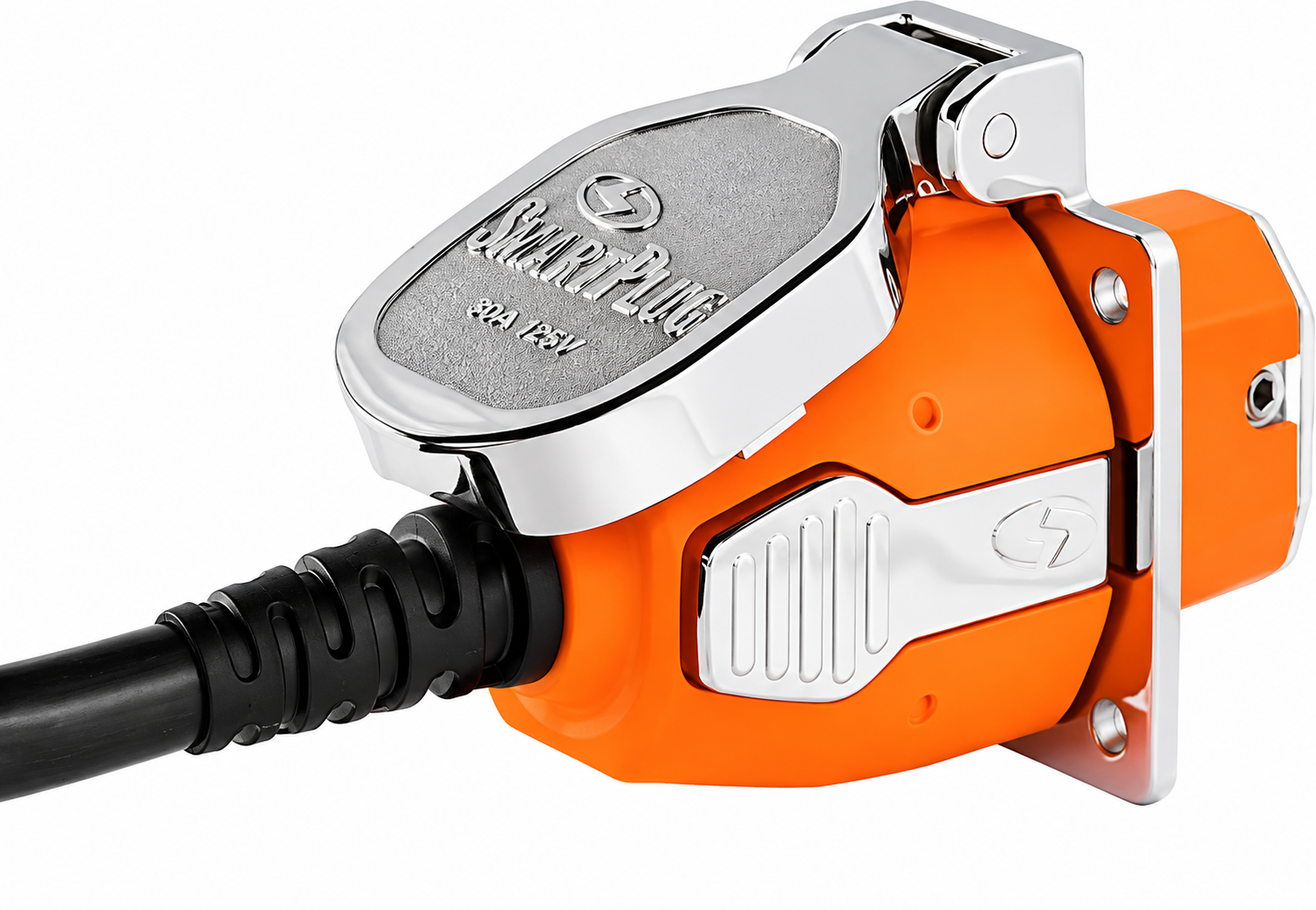
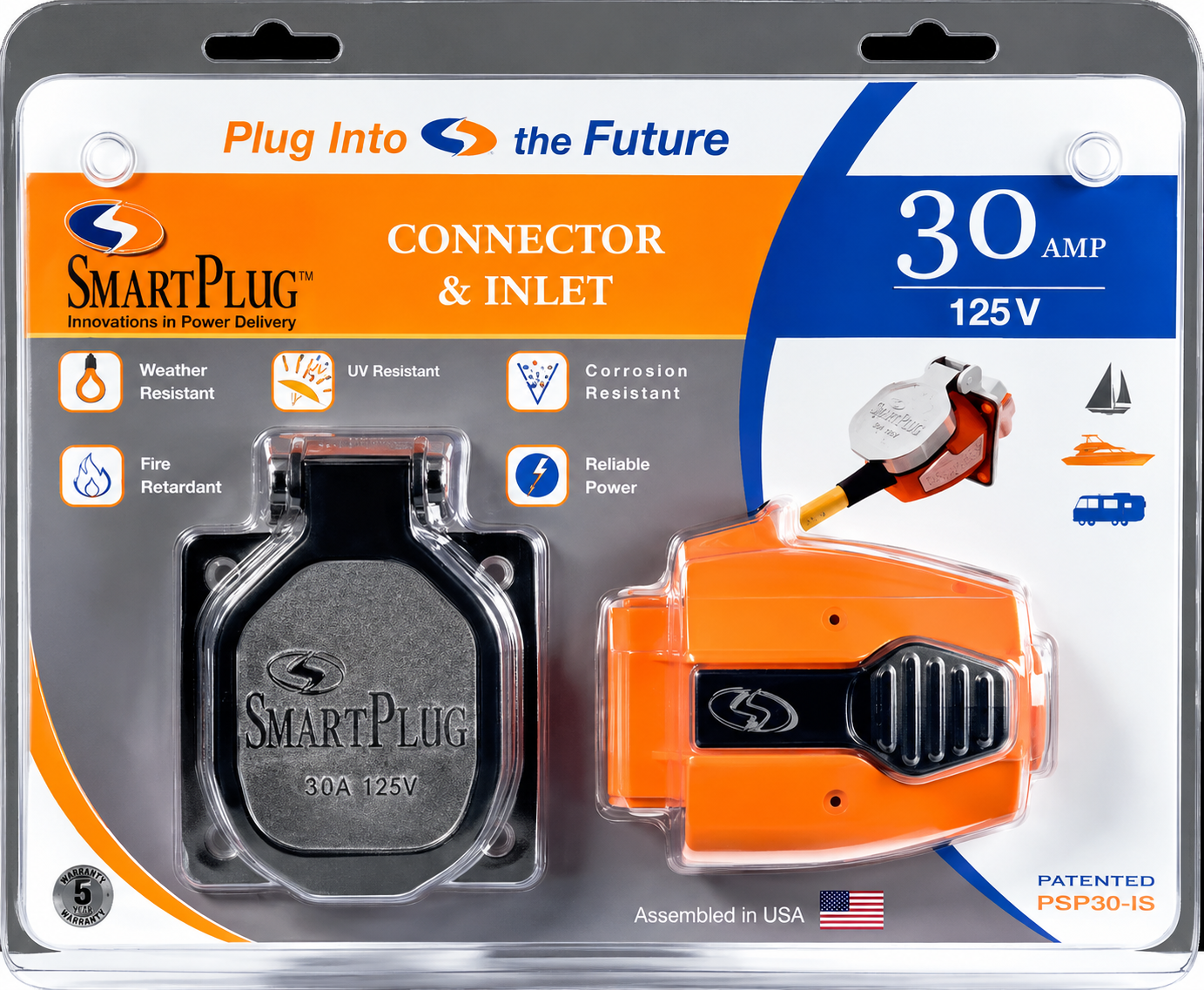
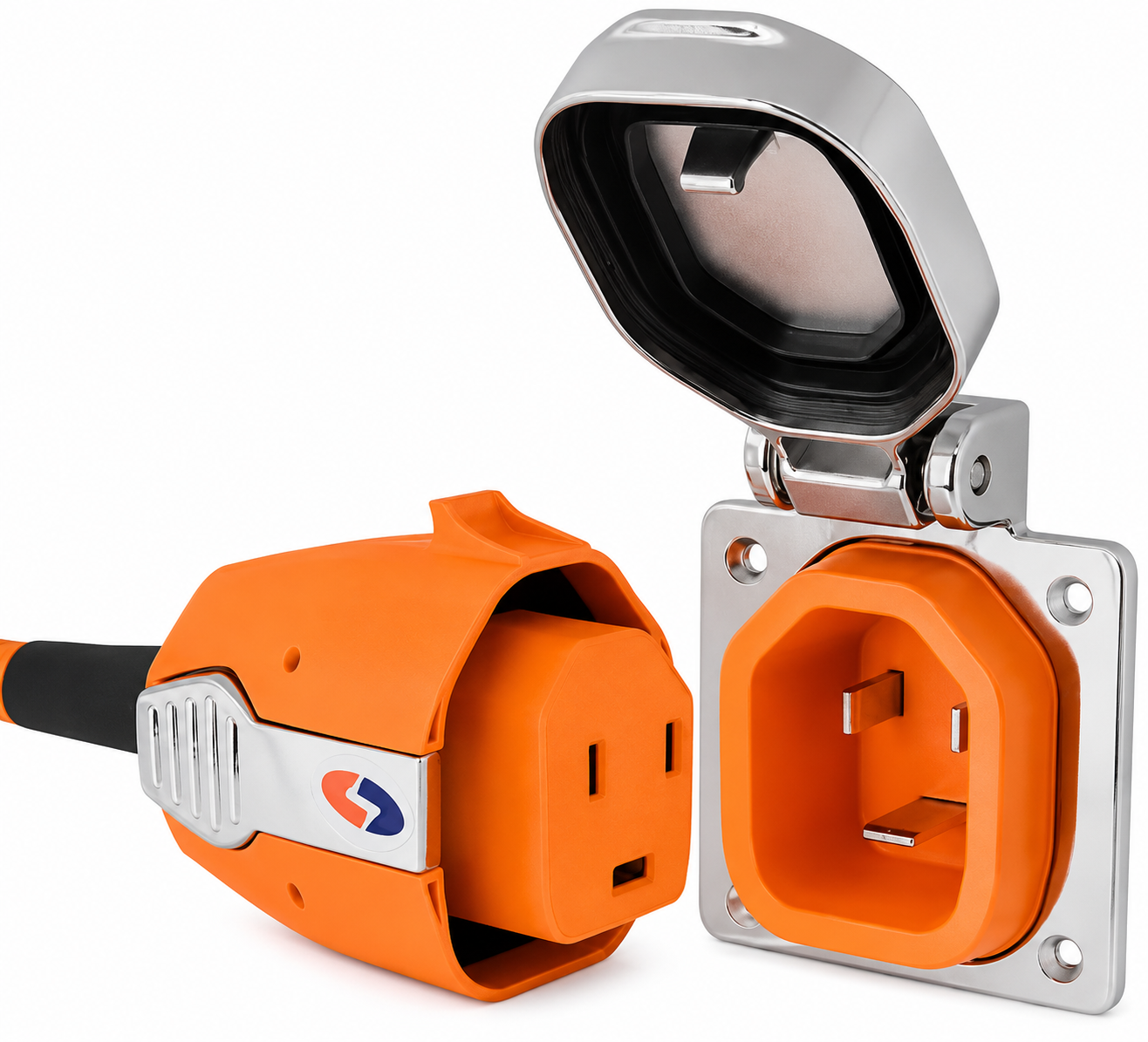
Every item on that checklist exists because twist-lock hardware depends on a person doing several things right, every season, on both ends of the cord. SmartPlug was engineered to make most of that checklist unnecessary. Its marine-grade plug and inlet connect with a single push-to-lock motion — no separate ring, no twisting, and dramatically more contact surface area than a standard twist-lock pin.
- Marine-grade contacts designed for repeated outdoor, high-heat use
- No locking ring, no alignment step, no twist to get wrong under pressure
- Wide contact area built specifically to resist the heat build-up that causes meltdowns
- Available in both 30-amp and 50-amp kits to match your RV’s electrical system