


What Really Melts a 30-Amp Twist-Lock Plug (And How to Make Sure It Never Happens to You)
SmartPlug
August 8, 2026
3:42AM
A camper wrote in with a scary story: their shore power plug melted at a Wisconsin state park. They smelled burning plastic, assumed it was a neighbor’s campfire, and only realized the truth when they saw the damage. Everything else in the RV still worked — the only casualty was a string of outdoor lights. They wanted to know: was it a power surge, and could it happen again?
It's almost never a surge
The instinct is to blame a lightning strike or a power spike from the campground pedestal. But a real surge tends to damage electronics throughout the RV — not just melt a single plug and leave everything else fine. When only the connector is damaged, the far more likely culprit is heat building up right at the connection itself, and traditional twist-lock plugs have several well-known ways for that to happen.
The usual suspects behind a twist-lock meltdown
- No locking ring, or the wrong replacement part. Without the ring, the plug isn’t sealed against weather and can work itself loose from the inlet over time — both of which invite the arcing and resistance that generate heat.
- Skipping the final twist. Twist-lock connectors need roughly an eighth-turn after insertion to fully seat the internal contacts. Miss that step, or have the cord’s own weight and tension slowly rotate it back out, and the connection is left partially made — a classic recipe for overheating.
- Oxidized or dirty contacts. Every outdoor connector needs periodic contact cleaner to stay ahead of corrosion. Oxidation raises resistance, and resistance turns straight into heat under load.
- Loose terminal screws. A DIY plug replacement with an under-tightened screw creates a high-resistance hot spot in exactly the same way.
Notice the pattern: almost every twist-lock failure traces back to a manual step that had to be done correctly — ring installed, plug twisted, contacts cleaned, screws torqued — and wasn’t. That’s not really a “user error” problem. It’s a design that puts safety in the hands of a ritual instead of the hardware itself.
If a connector’s safety depends on remembering four separate steps, it’s only a matter of time before one gets missed.
How SmartPlug removes the weak points, one by one
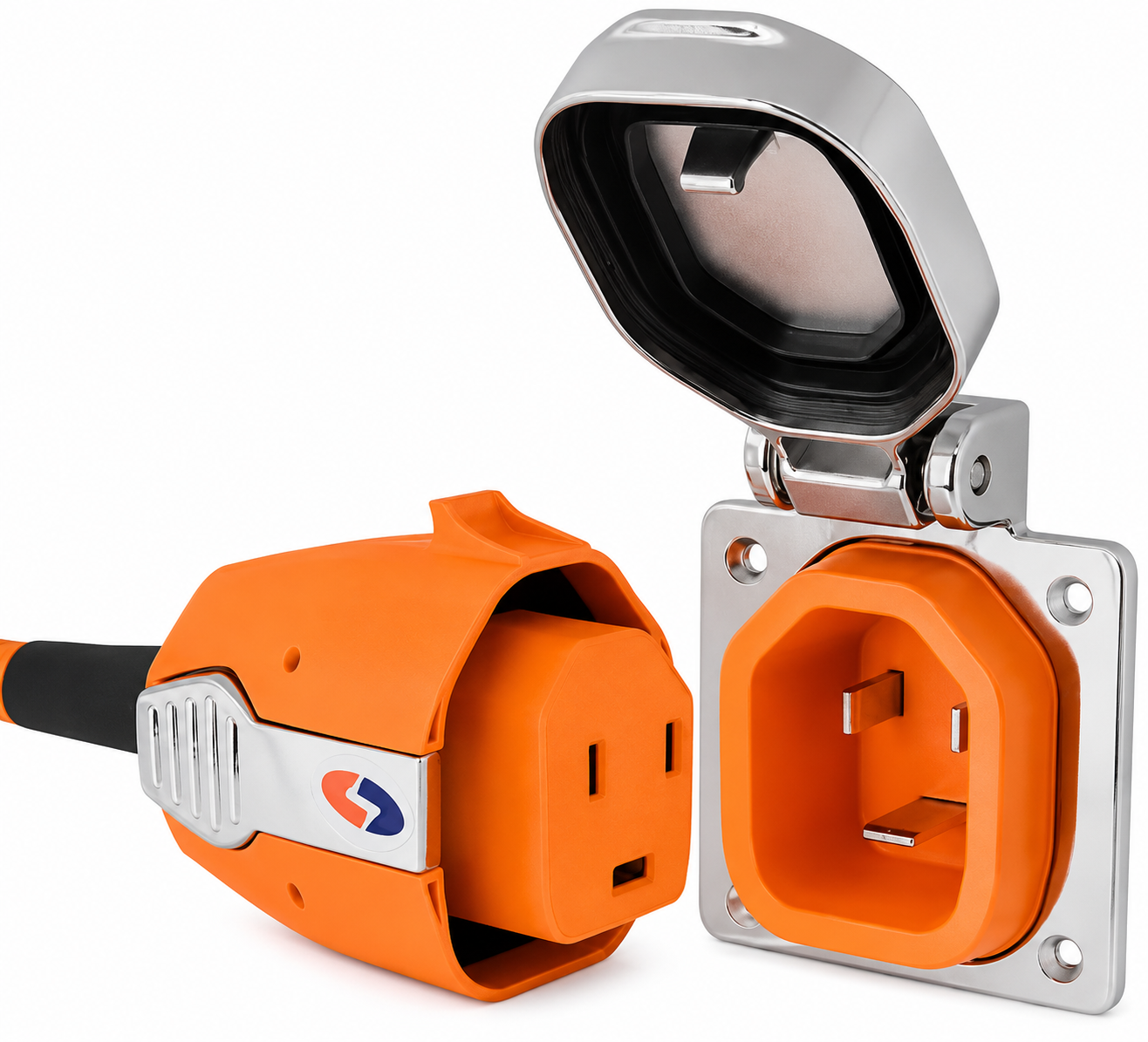
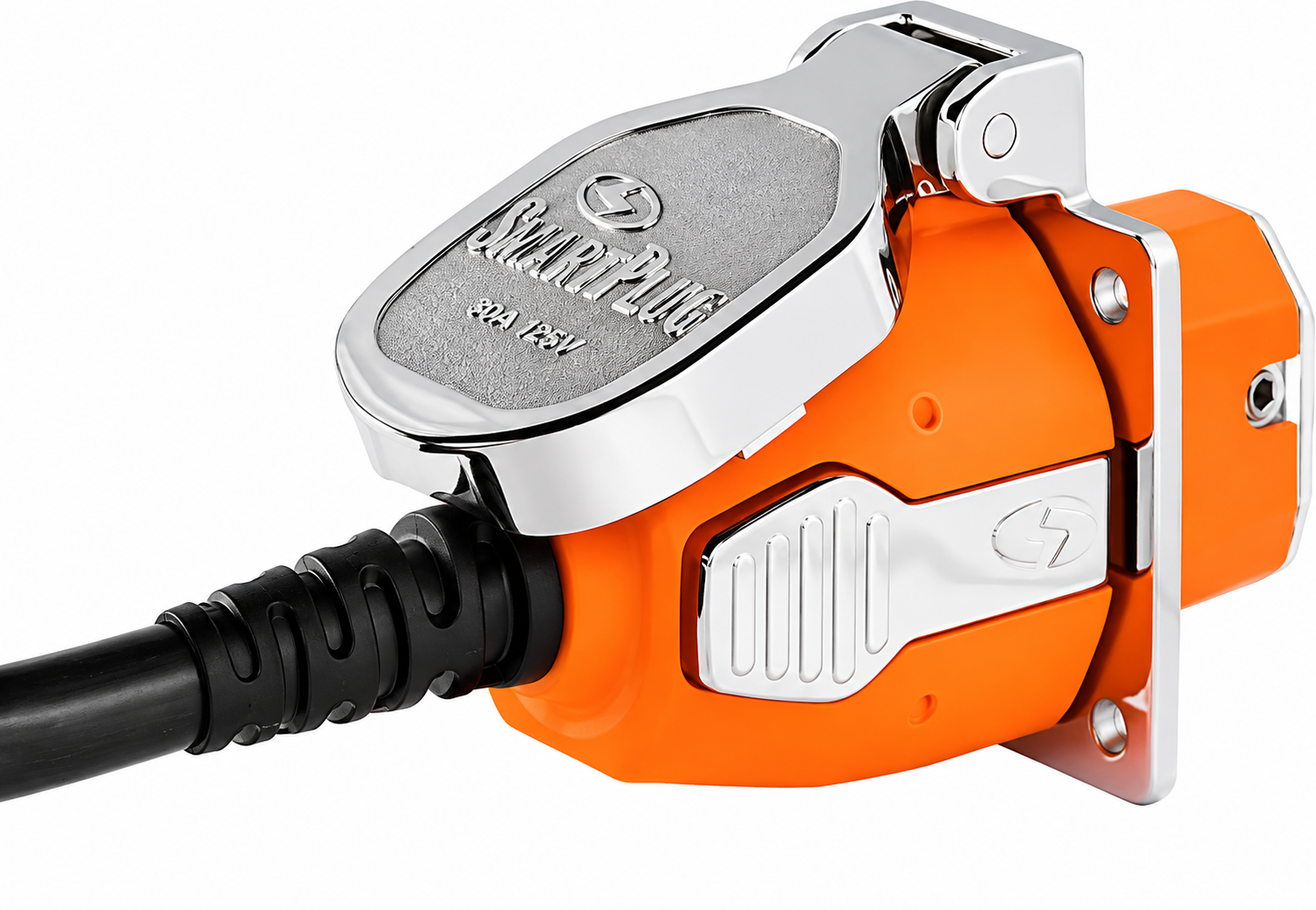
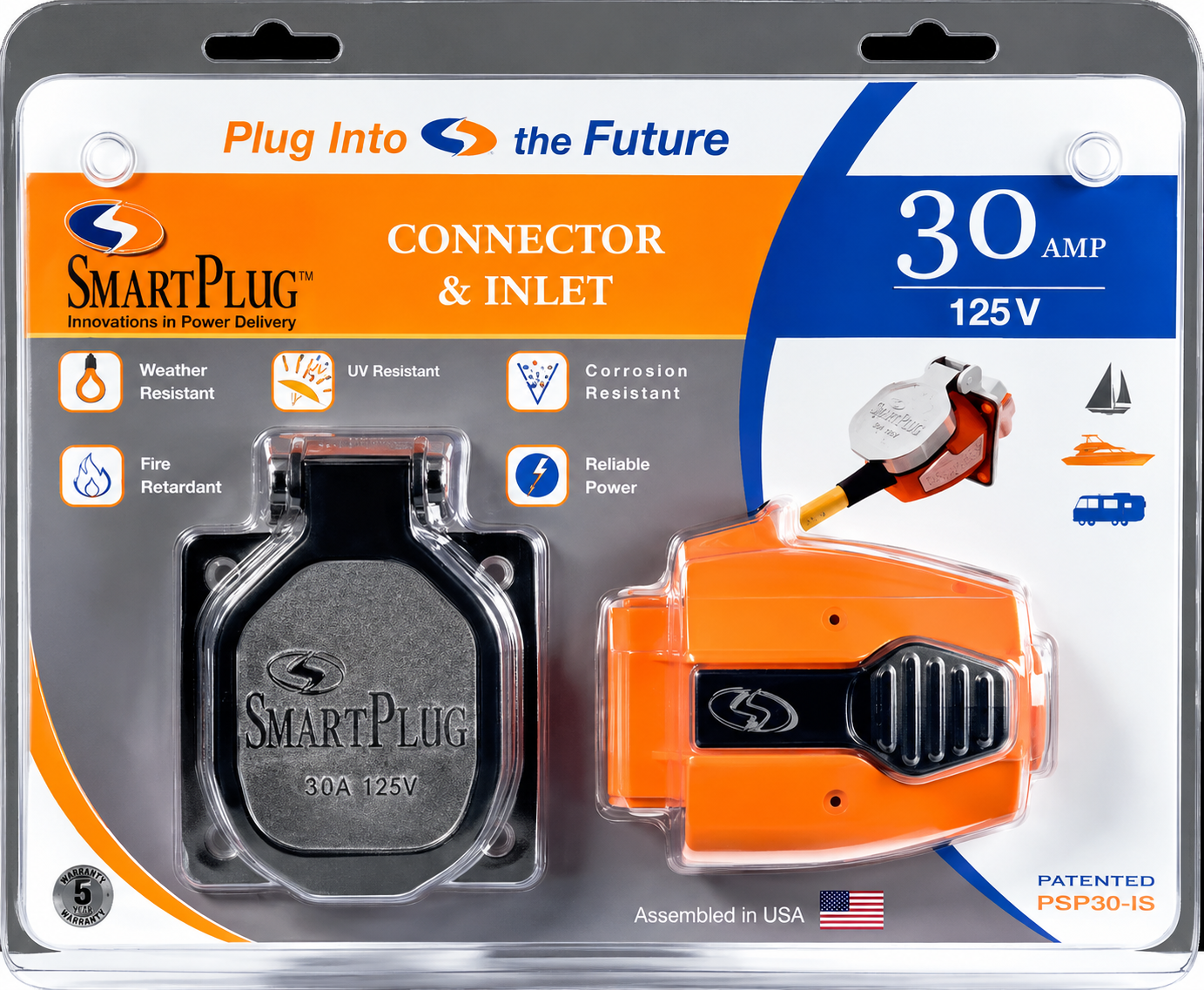
SmartPlug’s connector was engineered specifically around the failure modes twist-lock plugs are known for. Instead of round pins that need a ring and a twist to stay seated, SmartPlug uses a patented rectangular blade design that locks fully in a single straight-in motion — sealed, secure, and fully seated the moment it clicks.
- No locking ring to lose, cross-thread, or forget — the connector seals and locks on its own
- No twist step to skip — one push, fully seated, every time
- Wider blade contacts with more surface area resist the resistance build-up that leads to hot spots
- A weatherproof housing that keeps moisture (and the oxidation it causes) out of the connection
- A visibly and mechanically confirmed lock — no partial connections that look fine but aren’t